Some games need a table, a box the size of a suitcase and an evening. SCOUT needs a corner of a café table. When we first played it, we called it a super nice card game: incredibly easy to learn, with unexpected strategic depth. And we decided on the spot that it would get a place in our bag.
What is SCOUT?
SCOUT is a small card game by Kei Kajino, published by Oink Games. It plays two to five, takes about 15 to 20 minutes, and was nominated for the Spiel des Jahres in 2022. The theme says you’re running a circus and scouting performers. The gameplay doesn’t care much about that.
How it plays
If you know Rummikub, you’ve got a head start. That was our first comparison too: it reminds you of Rummikub, but with a twist. You can’t change the order of your hand.
- Two numbers per card. Each card has a different number on the top and bottom.
- One flip, then hands off. You pick up your cards in the order they were dealt. At the start of the round, you may flip your whole hand once to use the other numbers. After that, no rearranging, no turning.
- Show. Play a single card, a set of the same number or a run of adjacent cards from your hand that beats what’s on the table.
- Scout. Or take a card from either end of the set on the table, turn it whichever way you like and slide it anywhere into your hand. The player you took it from gets a point.
That last move is the heart of it. Scouting a card can turn two loose cards into a run nobody can beat. That’s where the “unexpected strategic depth” comes from.
Where it shines
It’s incredibly easy to learn. That was our first verdict, and it’s the first thing you’ll notice. The depth sneaks up on you afterwards: the real game is in planning your hand, deciding which way to flip it, which card to scout and when to hold back.
And it’s small. Our first post about SCOUT asked our followers about their favorite small travel game for summer, and this was our answer. It’s the kind of box that goes on vacation with you. Our own photos of it were taken outdoors, not at our kitchen table.
Two players or more?
Our first impression was clear: SCOUT works great with two players, but it really shines with three or more.
The two-player mode changes a few rules. Each player gets three scout chips and has to spend one to scout, and there’s no “Scout & Show” combo.
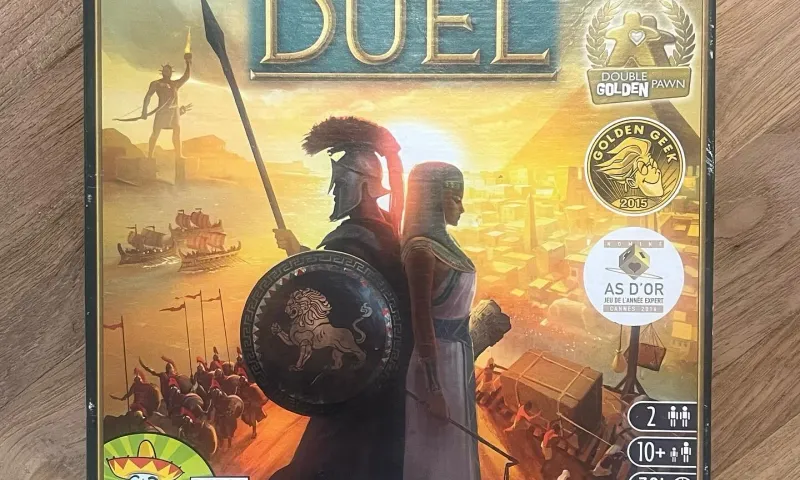
If two is your usual number and you want a card game built for two, 7 Wonders Duel is our pick. If you’re often three or more, at home or on a trip, SCOUT is the better fit.
Where it stings
The theme is paper-thin. Circus performers on the cards, a talent scout story on the box, and none of it matters while you play. A wafer-thin veneer, nothing more.
And with two, as we said, it’s good but not at its best.
SCOUT with kids
The publisher says 9 and up. The play itself is simple, but you often hear that setting up the hand can be fiddly for younger kids.
We haven’t written up how SCOUT works with our daughters, so we won’t guess here.
What we hear in the community
Like us, many praise the mix of simple rules and real depth, especially the subtle choice of when to scout instead of show. And it fits in a handbag or a large pocket.
The two-player mode is the most common criticism: far less fun than the full game, though fine as a warm-up. Some think it’s at its best with four or five.
Our verdict
SCOUT is a small game with a big brain. Easy to learn, clever to play and tiny enough to come along anywhere. It works with two, but grab it if your group is often three or more. Board games for families of all kinds, and this one fits in any of their bags.
If you want a theme that matters, or a card game built only for two, look elsewhere.

Where it shines
- Incredibly easy to learn
- Unexpected strategic depth for such a small game
- The no-rearranging rule makes every hand a puzzle
- Tiny box, perfect for travel

Where it stings
- Works with two, but really shines with three or more
- The circus theme is barely there
Fact sheet
- 2–5
- 15–20 min
- 9+
- Kei Kajino
From our table
FAQ
Is SCOUT good with two players?
It works great with two in our experience, but it really shines with three or more. In the community, you often hear that the two-player mode is noticeably weaker than the full game.
What makes SCOUT different from other climbing card games?
You can't change the order of your hand. Every card has two numbers, and you decide once at the start of a round which way up to hold your whole hand.
Is SCOUT a good travel game?
We think so. It's a small box that's easy to learn, and it has a spot in our bag.
How long does SCOUT take?
About 15 to 20 minutes.
What age is SCOUT for?
The publisher recommends 9 and up.