Card game
Two-player
A Whole Civilization in Half an Hour7 Wonders Duel
7 Wonders Duel packs a whole civilization into 30 minutes for two. Why it beats the big 7 Wonders for us, how it works with kids, and where it stings.
Board and card games that really work with two players, tested at our own table, from quick card games to deeper strategy.
7 Wonders Duel packs a whole civilization into 30 minutes for two. Why it beats the big 7 Wonders for us, how it works with kids, and where it stings.

Everdell Duo is faster, meaner and more direct than the original with two players. The components? Less great. Our honest verdict, plus what others say.

Sky Team is a 20-minute co-op dice game for exactly two. It didn't wow us on the first flight, and it still keeps coming back to our table.
"Board games for couples" sounds like candles and a cheese board. At our house it mostly means elbows out. Two players are a special table: no crowd to hide in, no third player to blame, every move lands on the person across from you.
And "couples" is only half of it. A parent and a kid after the little one's in bed. Two roommates on a Tuesday. Siblings, best friends, partners in a rainbow family, grandparents who've played each other for decades. If your table regularly seats exactly two, this list is for you. Some of these we play as a couple, some with our 10-year-old, one with a friend from the neighborhood.
For the games at the very top of our list, we give our rating. Where we've written a full review, we link to it. Where we haven't, we say so.
Small box, short rules, done before the dishwasher is.
A tiny card game of risk and deduction. You hold one card, draw one, play one, and try to be the last player standing or hold the highest card when the deck runs out. The current edition plays two to six, and with two, a few cards are removed face up so you can’t simply count your way to the answer.
Why we like it: it’s one of our absolute favorites, 9/10 in our ratings. We were thrilled to finally get our hands on the out-of-print Star Wars: Jabba’s Palace version, too. We haven’t written a full review yet.
An origami-themed card game by Bruno Cathala and Théo Rivière. Draw two and keep one, or grab from a discard pile, play pairs for little effects, and decide when to end the round. With two, it becomes a direct duel over the two discard piles, and for some players, two is their favorite count.
Why we like it: it’s one of my wife’s favorite games. Read our Sea Salt & Paper review.
A two-player card battler co-designed by Richard Garfield, the creator of Magic: The Gathering. Each player has two Mindbugs that steal an opponent’s creature the moment it’s played, so every card you play might end up fighting for the other side.
Why it’s here: we’ve rated it 10/10, the highest score on this list, but we haven’t written it up yet. Consider this a teaser.
Real boards, real decisions, still a weeknight.
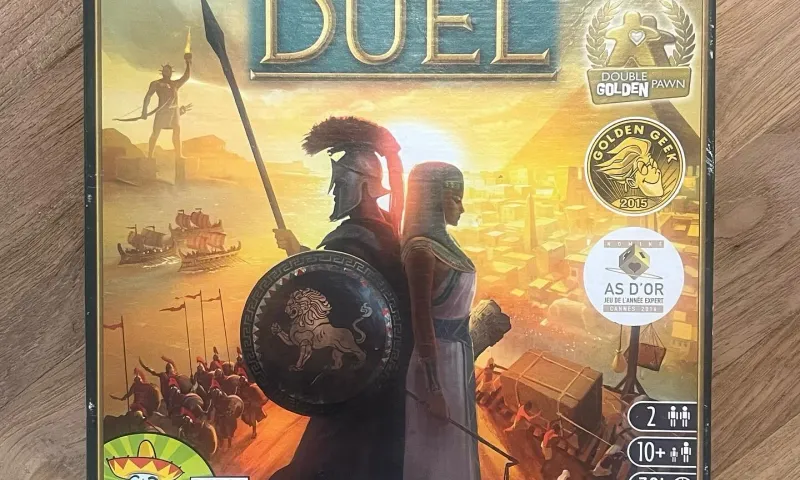
The two-player standalone version of 7 Wonders by Antoine Bauza and Bruno Cathala. You draft cards from a shared layout to build a civilization, with science, military and wonders as competing routes to victory, in about 30 minutes.
Why we like it: it’s one of our favorite games, 9/10. When we finally tried the big 7 Wonders, we liked it a lot, but for us Duel still holds the top spot. See our 7 Wonders Duel review.
Same designers, same publisher, new world. One player leads the Fellowship, the other plays Sauron, and the game borrows 7 Wonders Duel’s mechanics without being the same game. It plays in 30 to 45 minutes.
Why we like it: as huge 7 Wonders Duel fans, we picked it up at SPIEL and it was a lot of fun from the first game. The new mechanics give the formula a fresh twist. One flag from our first games: every round was won through the map. Maybe a bit overpowered, maybe beginners’ luck. More in our Duel for Middle-earth review.
The two-player standalone version of Everdell. Each player gets three workers and seasons have a fixed length.
Why we like it: faster, more direct and much more head-to-head than the original with two. Our games take about 30 minutes, and right now it’s our favorite way to play Everdell with two. The components are a size cheaper than the big box. Read our Everdell Duo review, or which Everdell to buy if you’re torn.
Richard Garfield’s monster dice game, rebuilt for two. Instead of fighting over Tokyo, you pull markers along two tug-of-war tracks. The box says 8+ and about 20 minutes.
Why we like it: with two, it’s more intense and more strategic than the original King of Tokyo, and we’ve played it a lot, my wife and I, and for a while very often with our older daughter. The catch: some monsters are clearly stronger than others. Read our King of Tokyo: Duel review.
A standalone Wingspan box for one or two, with a Duet mode that adds a shared map.
Why we like it: Duet mode turns polite two-player Wingspan into a real duel. My daughter prefers it to regular Wingspan; I’m torn. Our games take about 30 minutes, and the small deck shows its limits quickly. Read our Wingspan Asia review.
A cooperative dice game for exactly two. You land a plane together, rolling in secret and placing dice on a shared cockpit without discussing your choices. It takes about 20 minutes and won the Spiel des Jahres.
Why we like it: honestly, it took a while. After our first flight, we weren’t fully on board yet, hype or no hype. Too early to judge, we said back then. We gave it another go on a rainy Sunday, and since then it keeps coming back to the table. If one of you hates losing to the other, this is the safe pick. Read our full Sky Team review.
The original trilogy as an asymmetric strategy game: the Empire hunts for the hidden Rebel base, the Rebels try to hold out. The official play time is three to four hours.
Why we like it: it’s the most immersive two-player game we know. Our first game took around six hours, and every minute was worth it. The problem is finding that day, so it gets played far less than we’d like. 9/10. Read our Star Wars: Rebellion review.
A space war disguised as a card game, for two to four.
Why it’s here, with an asterisk: we’ve played it with two, three and four. All of them work, but three is our sweet spot. A game takes us about 90 minutes. If your duo loves direct conflict, it’s worth it. 9/10. Read our Arcs review.
Some great games just don’t like a table of two.
The best 2 player card games from our own shelf: true duels, quick pocket games and a co-op adventure, plus an honest word on what falls flat with two.
Agent Avenue is a quick bluffing duel from the makers of Mindbug. Why it works so well for two, plays from age 6, and still doesn't quite match Mindbug.
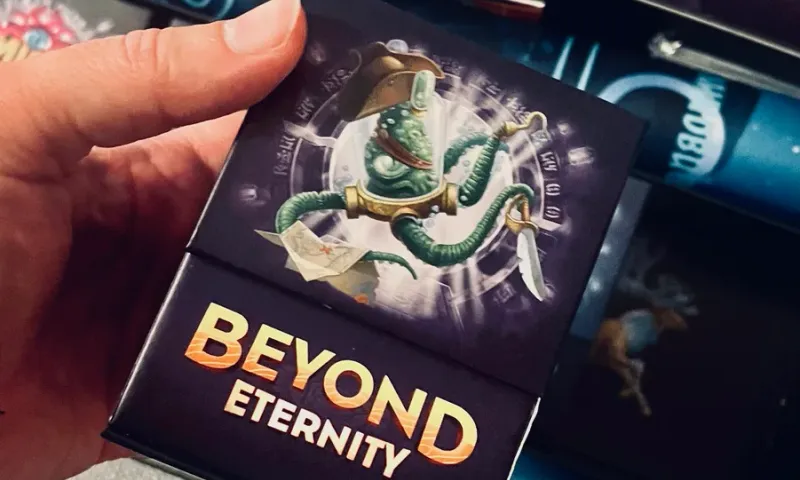
Beyond Eternity adds Boost and abilities that work from the discard pile. Why it's the most confrontational Mindbug box for us, and why it gets a 10/10.
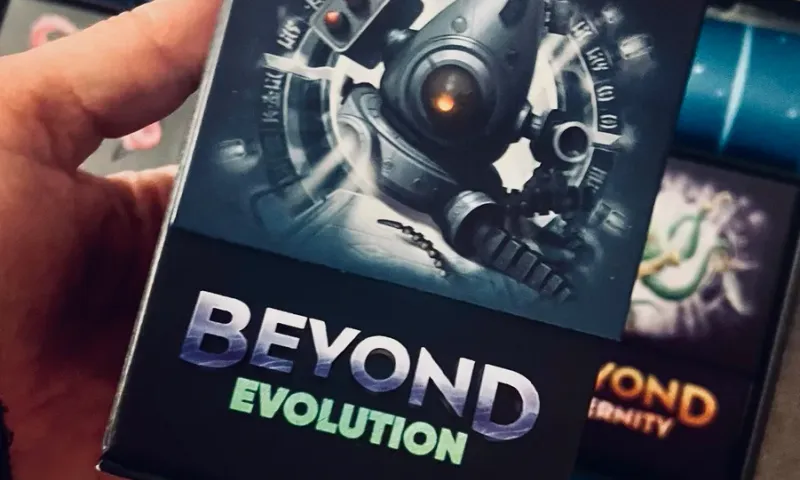
Beyond Evolution adds Actions and creatures that evolve in three stages. Why the constant trade-off works so well, and why the box gets a 10/10 from us.
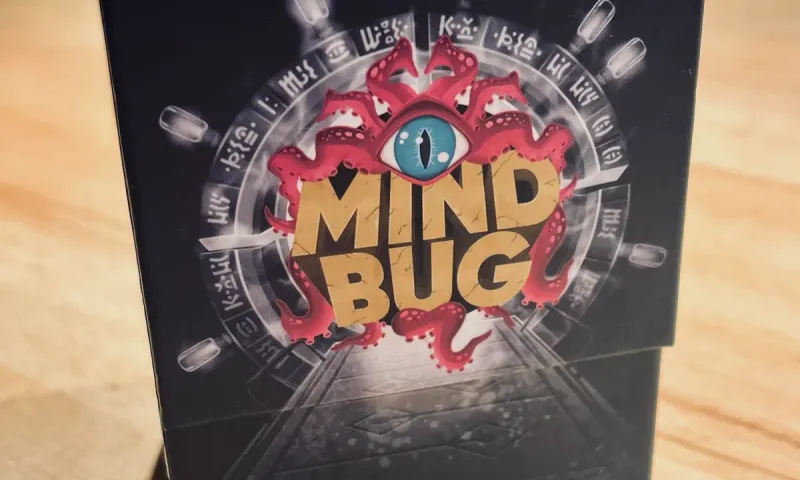
Mindbug: First Contact is the base set of the card duel: simpler, clearer, a little rawer. Why it's our pick to start with, and why it gets a 10/10.

Mindbug x King of Tokyo adds dice, energy and Power cards to the card duel. Why it isn't King of Tokyo, and why it still scores a 9/10 at our table.
7 Wonders Duel packs a whole civilization into 30 minutes for two. Why it beats the big 7 Wonders for us, how it works with kids, and where it stings.

Arkham Horror: The Card Game is a co-op horror story where every card matters. Our honest take on the theme, the rules load and the expansion rabbit hole.

Cascadia is a beautiful, peaceful tile-laying puzzle that's perfect for a slow Sunday morning for two. Our take, how it compares to Harmonies, and more.
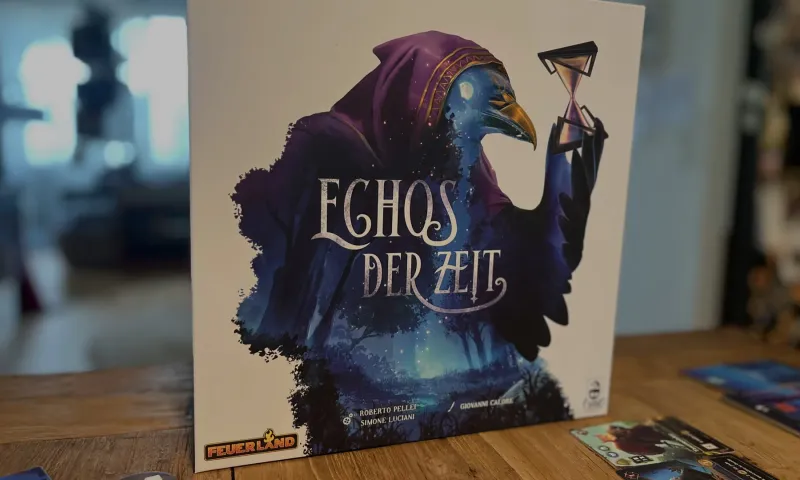
Echoes of Time makes your cards wait in line before they work. Easy to learn, quick to play and great with two. Our verdict, plus what we hear in the community.
Everdell Duo is faster, meaner and more direct than the original with two players. The components? Less great. Our honest verdict, plus what others say.
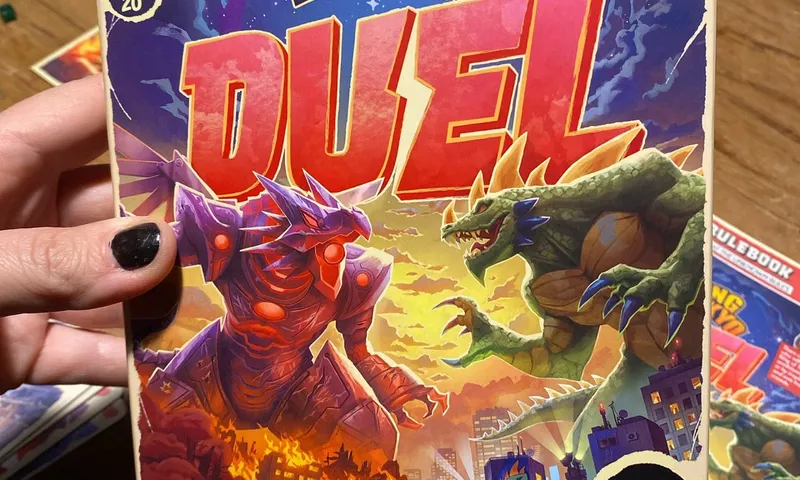
King of Tokyo: Duel turns the monster dice brawl into an intense two-player tug-of-war. Why we like it more than the original at two, and what to watch out for.

Duel for Middle-earth takes 7 Wonders Duel to Tolkien's world. Our first games after SPIEL in Essen, the map question, and how it compares to the original.
We've played Love Letter more than any other game, even in line for roller coasters. Why this tiny classic is always with us.

SCOUT is easy to learn, surprisingly deep and small enough for any summer bag. Our first impressions, how it plays, and where it stings.
Sky Team is a 20-minute co-op dice game for exactly two. It didn't wow us on the first flight, and it still keeps coming back to our table.
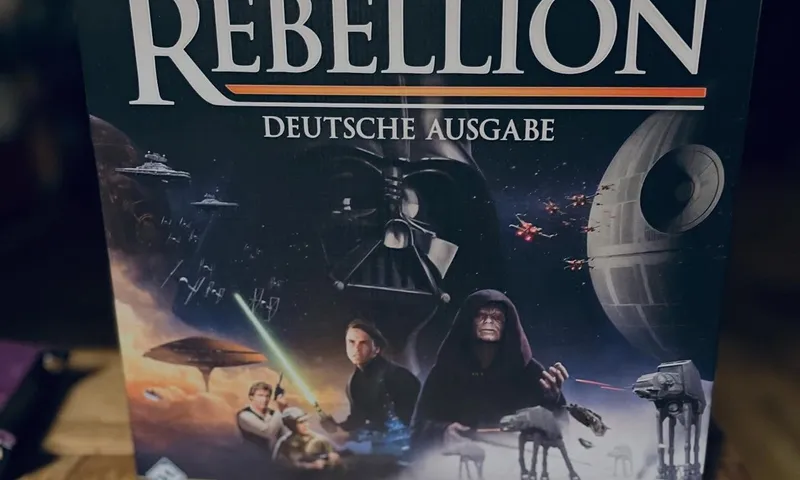
Star Wars: Rebellion took us six hours for our first full game, and every minute was worth it. The most immersive two-player game we know, if you find the time.

Wingspan is quiet, gorgeous and still great with two. What we like, where it stings, how it works with kids, and a word on the European Expansion.

Wingspan Asia's Duet mode makes two-player Wingspan a real duel. Why my daughter prefers it, why I'm torn, and why the small deck shows its limits fast.
There's no single winner, but our favorites with two are 7 Wonders Duel, Everdell Duo and Love Letter. For a cooperative game, try Sky Team. If you have a whole day, Star Wars: Rebellion is the most immersive two-player game we know.
Love Letter, Sea Salt & Paper and King of Tokyo: Duel are all short. Everdell Duo and Wingspan Asia take us about 30 minutes.
Yes. Sky Team is a cooperative game for exactly two: you land a plane together using dice, without discussing your moves. It won the Spiel des Jahres.
In our experience, Living Forest and Heat. With two, one strategy dominates Living Forest, and Heat's race lacks tension with only two cars, even with the bots.
Not at all. These games work for any two people: a parent and a kid, roommates, siblings or two friends. We play them as a couple, with our older daughter and with friends.
One email, now and then: what hit our table, what flopped, and what the kids actually wanted to play again.