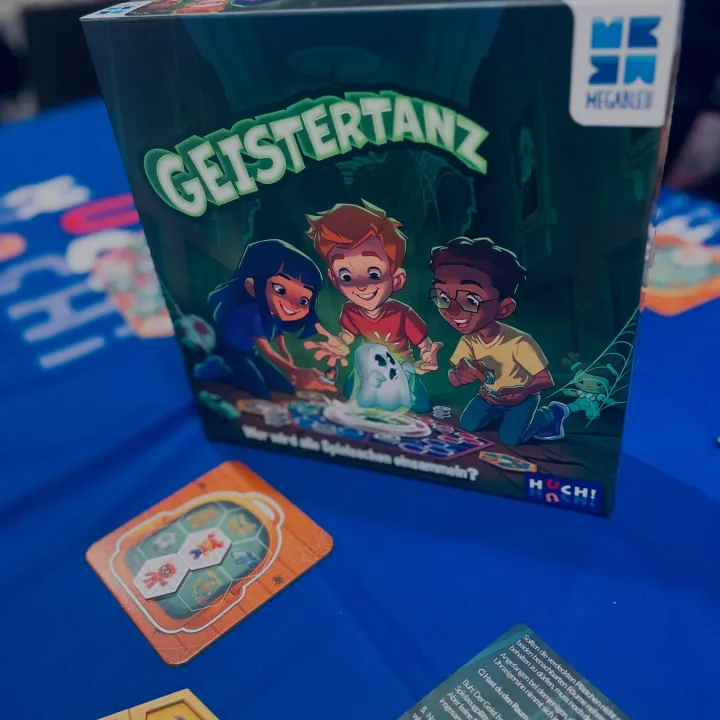
A ghost in an abandoned mansion. A magic candle. A backpack to fill with toys. On paper, Geistertanz has everything a kids’ game needs. At the table, it left us a bit disappointed.
We played it at Berlin Brettspiel Con. This is a children’s game with room for improvement, and we’d rather tell you that straight than sell you a pretty box.
What is Geistertanz?
Geistertanz (German for “ghost dance”) is a children’s game from Megableu, a French publisher of kids’ games founded in 1994. It’s for two to four players, listed from age 6, and a game takes about 15 to 20 minutes.
We couldn’t find an English edition, so if you’re outside the German-speaking world, you may have a hard time getting hold of it. We’re using the German title here because that’s the only one we could find.
How it plays
In an old, abandoned mansion, a ghost is causing mischief. With the faint glow of a candle, you make it move on, while you collect toys and dodge the ghost yourself. Once your backpack is full, the round ends.
Each player secretly picks a room, then the candle makes the ghost “dance” to a new spot, and you grab a toy for your backpack. The candle works without batteries.
That’s really the whole game. Pick, move the ghost, collect. Repeat until a backpack is full.
Where it shines
Let’s give credit where it’s due. The concept sounds charming. A ghost you push around with candlelight is a lovely hook for a children’s game.
Visually, it clearly appeals to kids around age 6 and up. The ghost and the candle in the middle of the board are exactly the kind of centerpiece that makes young kids want to sit down and play. If a game’s first job is to get kids to the table, Geistertanz does that part well.
Where it stings
In practice, the game quickly feels repetitive and fairly predictable. Once you grasp the basic principle, it’s easy to see how the upcoming rounds will play out.
For a children’s game, simplicity is fine. Nobody expects a 6-year-old to plan five turns ahead. But even within that framework, there’s a noticeable lack of real tactical decisions. The choices stay largely the same, no matter how the round unfolds.
That’s the real problem. A good kids’ game doesn’t need many rules. It needs a few choices that actually matter, so a child can feel clever when a plan works out. Geistertanz has the dancing ghost. It doesn’t have that moment.
Geistertanz with kids
The age on the box is 6+, and the look of the game clearly matches that age. The rules are simple enough that young kids should pick them up quickly, and with 15 to 20 minutes per game, it fits into a short window before dinner or bedtime.
Whether it holds a child’s interest is another question. The repetitiveness we noticed is exactly what tends to make a kids’ game go back on the shelf. Your mileage may vary if your kid is head over heels for ghosts. Some kids happily play the same thing on repeat. Most grown-ups, less happily.
Is it a good gift?
Gifts are where a game like this usually ends up, so let’s look at it from that angle. The list price is 29.99 euros, the box is a compact 27 by 27 centimeters, and the candle doesn’t need batteries, so there’s nothing to charge or replace. Given how much the look appeals to kids, the first reaction is likely to be a good one.
The question is what happens on day ten. For about 30 euros, we’d expect a kids’ game to keep giving children something new to figure out. Based on our game, Geistertanz runs out of new things to figure out quickly. As a gift for a ghost-loving 6-year-old, it’ll make a good first impression. As a game the whole family keeps reaching for, we’re skeptical.
What we hear in the community
Honestly: next to nothing. We’ve found hardly any community voices on Geistertanz, in English or German. What’s out there is marketing copy about a magic candle and a dancing ghost, and that’s the box talking, not other players.
If you’ve played it with your kids and had a different experience, we’d genuinely like to hear it.
If you want a kids’ game with more going on
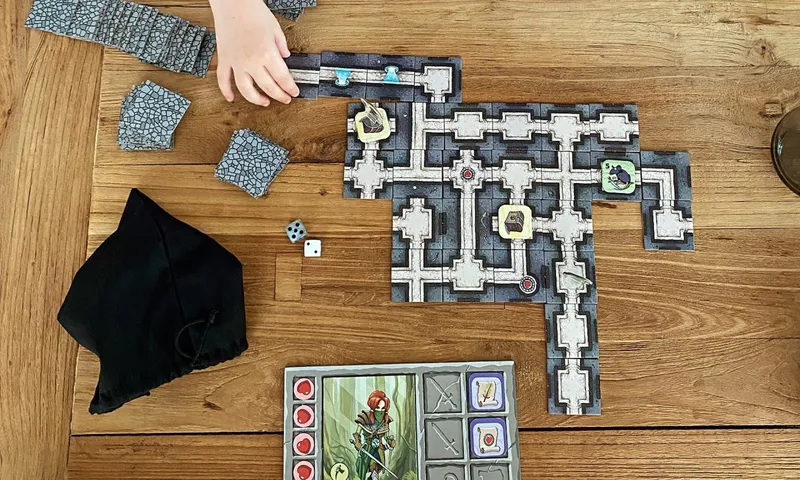
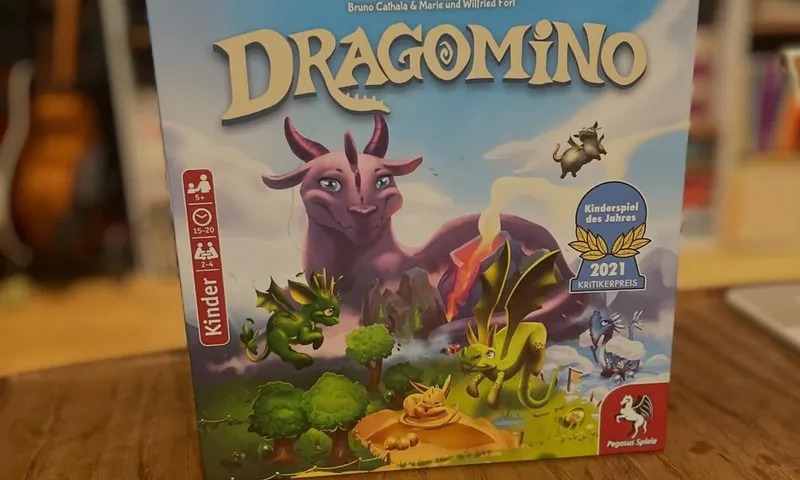
If you’re shopping for a game for a 6-year-old and want something with real decisions, two of our favorites fit the bill. Dragomino is the one kids’ game we actually enjoy playing too, and it’s surprisingly strategic for its size. Karak is a real dungeon crawl with simple rules that grown-ups enjoy as well. Both give kids choices that matter, which is exactly what Geistertanz is missing.
Our verdict
Geistertanz has a charming idea and a look that kids will love at first sight. But the gameplay gets repetitive fast, it’s predictable once you understand it, and it doesn’t give children real tactical decisions. Even by the standards of a simple children’s game, that’s not quite enough.
If your kid is obsessed with ghosts and you mostly want a pretty, short game for the youngest, it might still find a place in your home. For families of all kinds looking for a kids’ game that lasts, we’d look elsewhere first.

Where it shines
- A charming concept: a ghost in an abandoned mansion and a candle that moves it on
- Visually, it clearly appeals to kids around 6 and up
- Simple rules: pick a room, move the ghost, grab a toy

Where it stings
- Gameplay quickly feels repetitive
- Fairly predictable: once you get the principle, you can see how the next rounds will go
- A noticeable lack of real tactical decisions, even for a children's game
- The choices stay largely the same, however the round unfolds
Fact sheet
- 2–4
- 15–20 min
- 6+
- Megableu
- Berlin Brettspiel Con
From our table
FAQ
What age is Geistertanz for?
It's listed from age 6. Visually it clearly appeals to kids around 6 and up.
How long does a game of Geistertanz take?
About 15 to 20 minutes, for 2 to 4 players.
Is there an English version of Geistertanz?
We couldn't find one. Geistertanz is by the French publisher Megableu and is sold in German-speaking shops under this name.
Does Geistertanz need batteries?
No, the magic candle works without batteries.
Is Geistertanz worth buying?
We were a bit disappointed. The concept is charming, but the game quickly feels repetitive and predictable, with few real tactical decisions, even for a children's game.