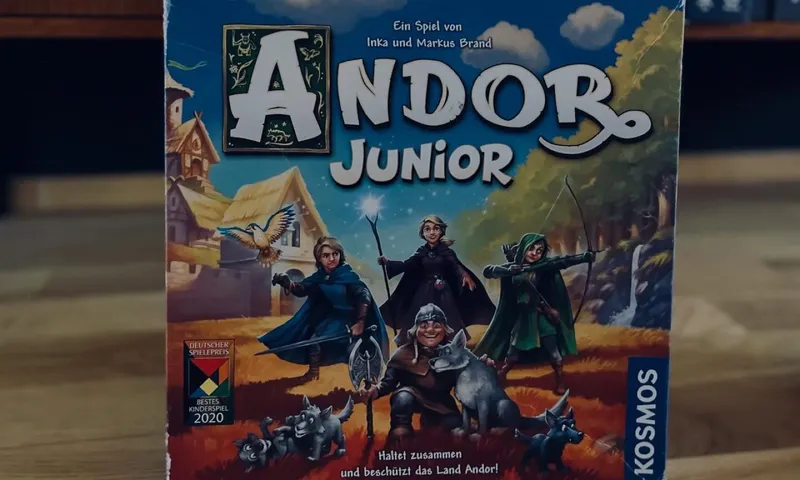
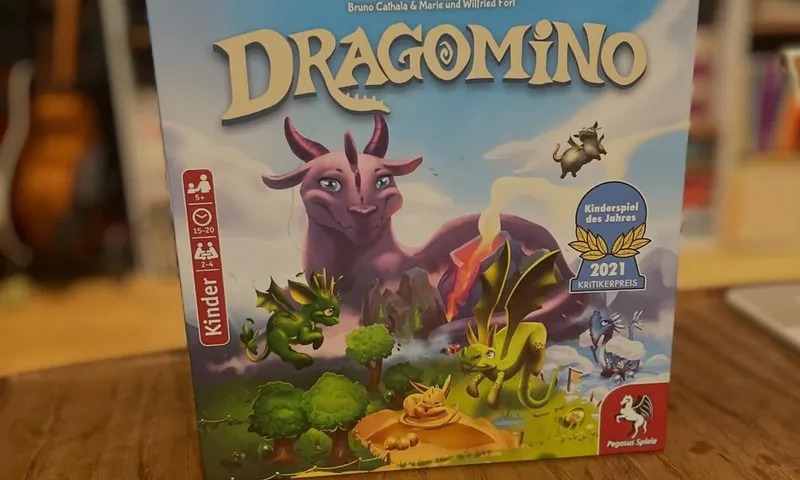
It's almost eight. Everyone's running on fumes, both kids are tired, and our youngest is just behind in the last game of the day. You've got two options: keep playing for real and risk a meltdown, or very quietly take the worse tile. If you have kids, you know this moment.
We wanted to know what science says about it. The surprising answer: nobody has studied it directly. But there's enough research around it to see a pretty clear direction.
The quick answer
- The surprising truth: No study has ever directly tested "letting kids win". Everything on it is expert opinion.
- What experts still advise: Help little ones, yes. But openly. And let in more real losses every year.
- The catch with secretly losing: Kids grasp rules earlier than most parents think. An open head start is the more honest help.
- And us? Mostly we play for real. Right before bed, with tired four- to seven-year-olds? We're not that strict.
Our confession
As a rule, we don’t let our kids win on purpose. Kids should learn to lose, too: that you lose sometimes, and that you get better with every try.
With kids between four and seven, though, it depends a lot on the mood. Right before bed, nobody in our family needs a drama because a child lost. Especially when everyone’s done for the day and the kids are tired, their frustration threshold is much lower. Dragomino is great for this: I can quietly steer whether my youngest wins, or play for real when she’s ready for a proper challenge.
And it still tips over sometimes. At our table, losing often isn’t even the biggest problem. Winning is. For our older daughter, not gloating is hard, and that leads to fights more often than we’d like. Usually, that’s when the game is over. It’s a tough moment for everyone, and we don’t have a magic fix.
What research says
Even two-year-olds notice when someone cheats
In experiments, a puppet played a simple rule game “wrong”. Even two- and three-year-olds protested, the three-year-olds much more explicitly (“No, that’s not how it goes!”). So kids understand game rules very early as norms everyone should follow (Rakoczy, Warneken & Tomasello, 2008).
Their understanding of what a competitive game is about keeps growing with age. It’s a fair guess that a school-age child is more likely to notice when something isn’t quite fair. Nobody has tested that for secretly losing, though.
Secretly losing: the catch hardly anyone thinks about
A study with 186 children aged three to seven found that five- to seven-year-olds who had just been lied to by an experimenter were more likely to cheat and to lie afterwards (Hays & Carver, 2014). Three- and four-year-olds showed no effect.
Important: the liar was a stranger, not a parent. And secretly losing isn’t a spoken lie. So you can’t transfer this directly. It does hint at why many experts recommend open solutions for older kids.
The better kind of help: a head start that shrinks
Developmental psychologists call it scaffolding: you help as much as needed and pull the help back as soon as the child can manage alone (Wood, Bruner & Ross, 1976). For board games, that means a head start for the little one that shrinks as she gets better.
What experts actually recommend
Because there’s no direct study, expert opinion is all we have on letting kids win itself. It points in a similar direction:
- Child psychologist Kenneth Barish lets young children win, but not every time, so their frustration tolerance can grow step by step (Barish, 2012).
- Others suggest adjusting the rules, not the result, for example double points for the younger child.
- Almost all of them stress: parents show what losing well and winning well look like.
The easiest trick against drama: play together
In one experiment, 96 four- and five-year-olds played the same game either together or against each other. After the cooperative version, they shared more with other kids (Toppe, Hardecker & Haun, 2019). Whether that teaches kids to lose better hasn’t been studied. Our experience fits, though: with cooperative games, there’s far less potential for conflict at our table. It’s just harder to fight when you’re all facing the dragon together in Andor Junior.
5 things to try at your next game night
- With little ones, it’s okay to be human. When everyone’s tired, a bit of help isn’t a parenting failure. Research doesn’t say otherwise.
- Open beats secret. A head start everyone knows about is more honest than a deliberately bad move. The older the child, the more it matters.
- Pull the help back. A little less head start every game, so the child sees she’s getting better.
- Winning well is part of it. It’s not just losing that needs learning, but how to behave as a winner.
- When it gets tense, play together. Cooperative games take a lot of pressure off.
What about you? Do you let your kids win, or is it no mercy at your table?
Sources
- Rakoczy, H., Warneken, F. & Tomasello, M. (2008). The sources of normativity: Young children’s awareness of the normative structure of games. Developmental Psychology, 44(3), 875–881. https://doi.org/10.1037/0012-1649.44.3.875
- Hays, C. & Carver, L. J. (2014). Follow the liar: The effects of adult lies on children’s honesty. Developmental Science, 17(6), 977–983. https://doi.org/10.1111/desc.12171
- Wood, D., Bruner, J. S. & Ross, G. (1976). The role of tutoring in problem solving. Journal of Child Psychology and Psychiatry, 17(2), 89–100.
- Toppe, T., Hardecker, S. & Haun, D. B. M. (2019). Playing a cooperative game promotes preschoolers’ sharing with third-parties, but not social inclusion. PLOS ONE, 14(8), e0221092. https://doi.org/10.1371/journal.pone.0221092
- Barish, K. (2012). Winning and losing. Psychology Today. https://www.psychologytoday.com/us/blog/pride-and-joy/201209/winning-and-losing
FAQ
Should you let your kids win at board games?
No study has tested exactly that. Experts mostly advise helping young children, ideally openly, and letting real losses in as kids get older. We usually don't let our kids win on purpose, but with four- to seven-year-olds it depends on the mood.
Do kids notice when adults lose on purpose?
Research shows that even two- and three-year-olds understand game rules as real rules and protest when someone breaks them. Older kids see through tricks more and more. Whether they notice a parent secretly losing has not been studied directly.
What's better than secretly losing?
An open handicap everyone knows about: a head start, bonus points or help for the younger child. Then you shrink it as the child gets better.
Which games work for kids who hate losing?
Cooperative games, where everyone wins or loses together. At our table there's far less conflict with those, for example with Andor Junior.